What Is Big Mac Sauce?
Big Mac Sauce, often called "special sauce," is the creamy, tangy condiment that defines McDonald's iconic Big Mac burger. Invented in 1968 by Pittsburgh McDonald's franchisee Jim Delligatti, the sauce was created alongside the Big Mac to compete with larger burgers from rivals like Bob's Big Boy.
Delligatti experimented with a simple mix inspired by Thousand Island dressing but tweaked it for a unique balance of sweetness, acidity, and savoriness. The blend is primarily mayo-based with relish for crunch, mustard for zing, and spices like paprika.
It debuted nationally in 1968 and became legendary through the 1974 jingle: "Two all-beef patties, special sauce, lettuce, cheese, pickles, onions, on a sesame-seed bun."
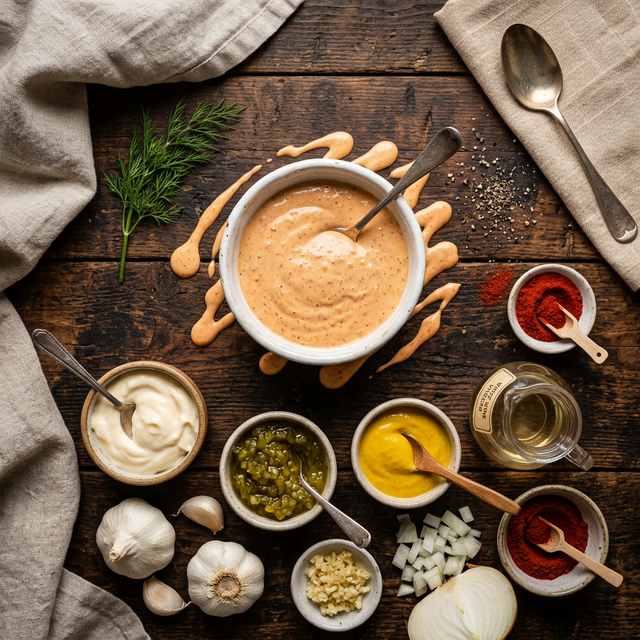 The iconic Big Mac special sauce
🌟 What Makes It Iconic?
The sauce elevates the ordinary into craveable, masking any burger imperfections with its velvety texture and multifaceted flavor. It's slightly sweet from relish, tangy from vinegar and mustard, smoky from paprika, and umami-rich from onions and garlic.
Over 50 years, it's sold billions of Big Macs (over 550 million annually worldwide pre-2020s), symbolizing fast-food nostalgia. Early versions evolved; by 1972, it stabilized into the current recipe, altered slightly in the 1990s for regional tastes but retaining core appeal.
Key Facts
Contrary to popular myths
Higher relish ratio sets it apart
Unmatched emulsification from commercial mixing
Great for dipping fries or wraps
Unlike generic dressings, its proprietary blend (never fully disclosed by McDonald's) creates addiction — studies link such sauces to dopamine hits from fat-sugar-acid combos.
Big Mac Sauce Ingredients
Main ingredients from copycat analyses and McDonald's allergen info (US: Contains Egg, Soy, Wheat) include:
| Ingredient | Function | Key Components |
|---|---|---|
| Mayonnaise | Base (~60%), provides creaminess | Soybean oil, egg yolk, stabilizers |
| Sweet pickle relish | Tangy crunch and sweetness (~30%) | Pickles, sugar, high fructose corn syrup, vinegar |
| Yellow mustard | Sharp acidity and zing | Distilled vinegar, water, mustard seed, spices |
| White wine vinegar | Sour balance for acidity | Pure vinegar |
| Paprika | Smoky color and flavor | Ground paprika peppers |
| Spices | Savory umami depth | Dehydrated garlic and onion |
No ketchup appears in the authentic recipe. The UK version includes water, rapeseed oil, gherkin, spirit vinegar, egg yolk, and spices. Exact proprietary ratios remain undisclosed by McDonald's, but the recipe was standardized in 1972 after varying regionally in early years.
For the most authentic homemade version, use finely grated onion WITH the juices — this replicates the emulsified texture McDonald's achieves with industrial equipment.
Allergen Information
According to McDonald's official allergen statements for the United States, Big Mac Sauce contains the following major allergens:
From mayonnaise base
Soybean oil in mayonnaise
Thickeners or stabilizers
In Australia, McDonald's lists it as containing Egg and notes that restaurants handle Gluten, Wheat, Egg, Milk, and Soy. These allergens are critical for individuals with food sensitivities or allergies.
How to Make Big Mac Sauce
Classic copycat method for making Big Mac Sauce involves combining the following in a bowl:
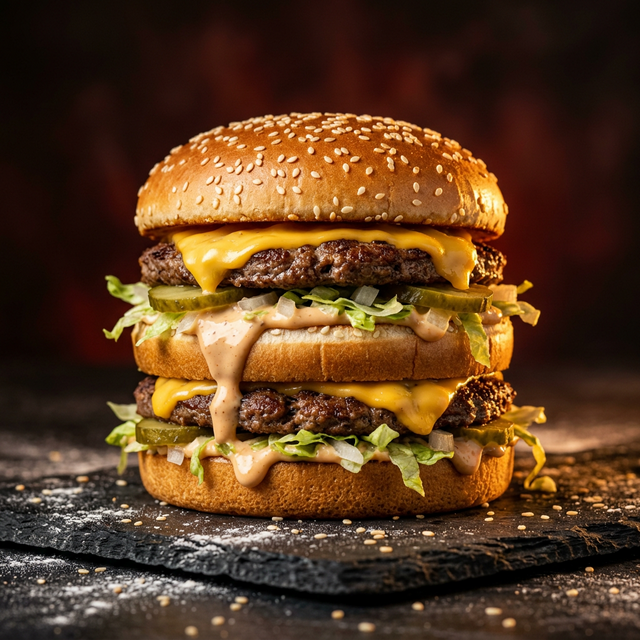
🧾 Ingredients
👨🍳 Instructions
Combine all ingredients in a medium mixing bowl
Whisk until smooth and fully combined
Cover and refrigerate for at least 1 hour for flavors to meld
Stir once more before serving on your Big Mac–style burger
🔄 Alternative Recipe
Another popular variation uses 2 tablespoons French dressing, 4 teaspoons sweet pickle relish, 1 tablespoon minced white onion, and 1 teaspoon white vinegar for a slightly different take on the classic.
Sauce Variations
Keto, Vegan, Low-Calorie, Dairy-Free & No Ketchup
Keto Version
Uses sugar-free mayo and ketchup, dill pickle relish without sugar, mustard, vinegar, paprika, and onion powder.
Vegan & Dairy-Free
Swaps traditional mayonnaise for vegan mayo (such as soy-based alternatives).
Low-Calorie Option
Substitutes Greek yogurt as the base, using ¾ cup nonfat yogurt with 1.5 tablespoons mustard and ketchup, plus relish.
No-Ketchup Variation
Follows standard recipes that already omit it, relying instead on extra relish and vinegar for tang.
Big Mac Sauce Calories & Nutrition
Nutritional information varies by source and region. Per serving (1–2 tablespoons, approximately 15–30 grams):
McDonald's Official US Nutrition Per serving (~2 tbsp)
Alternative Source Comparison
| Source | Calories | Fat | Carbs |
|---|---|---|---|
| CalorieKing | 90 cal | 9g | 1g |
| MyNetDiary | 70 cal (2 tbsp) | 7g | 1g |
| Open Food Facts (per 100g) | 268 cal | 21.2g | 15.4g |
These variations reflect differences in serving sizes and regional formulations.
Storage & Shelf Life
Storage and shelf life depend on whether the sauce is homemade or restaurant-supplied:
🏠 Homemade Version
- Refrigerated shelf life: 2–4 weeks when stored in a well-sealed container
- Preservation factors: Acidity from vinegar and proper refrigeration help preserve it
🍔 Restaurant-Supplied Sauce
- Unopened packets: Typically 6–8 month shelf life at room temperature
- Opened packets: Should be used within 2–3 days if refrigerated
- Restaurant bulk bags: Can last 8+ months refrigerated when unopened, but once thawed should be used within days
⚠️ Signs of Spoilage
When in doubt, discard the sauce.
Can You Buy Big Mac Sauce?
Big Mac Sauce is not available for purchase in official retail bottles, though it can be obtained at McDonald's restaurants in these ways:
🛍️ Copycat Products
Walmart's Great Value Secret Sauce mimics the flavor profile. Some specialty retailers may offer similar "special sauce" products inspired by the Big Mac formula.
McDonald's does not sell it in grocery stores officially.
Flavor Profile Analysis
The flavor profile of Big Mac Sauce combines creamy and tangy elements with sweet-savory notes:
Big Mac Sauce vs. Thousand Island
Many people wonder if it's simply Thousand Island dressing. While similar in base ingredients (mayo and relish), Big Mac Sauce differs significantly:
🍔 Big Mac Sauce
- Contains more relish
- No ketchup in authentic version
- Spicier, more savory notes
- Proprietary spice blend
🥗 Thousand Island
- Less relish in ratio
- Ketchup-forward profile
- Tangier, sweeter taste
- Standard dressing recipe
Former McDonald's chefs confirm this distinction, noting the specific spice blend and relish ratio that sets it apart.
Frequently Asked Questions
Creamy and tangy with sweet-savory notes from the balanced combination of mayo, relish, mustard, and spices. It's not overwhelmingly sweet — just enough to complement the savory burger components.
No, despite similarities. Big Mac Sauce contains no ketchup and has a distinct spice profile with more relish than traditional Thousand Island.
Yes, on Big Macs or as an extra condiment in limited quantities through app promotions, but not in grocery stores.
Homemade versions: 2–4 weeks refrigerated.
Unopened restaurant packets: 6–8 months at room temperature.
Opened packets: 2–3 days refrigerated.
There's no single "secret ingredient" — the magic lies in the balanced relish ratio and specific spice blend that McDonald's perfected.
According to McDonald's US allergen information, the sauce contains Egg, Soy, and Wheat, though formulations vary by region.
McDonald's US: 140 calories per serving (approx 2 tbsp). Other sources report 70–90 calories. Contains 11g fat, 8g carbs, 0g protein per serving.
Final Thoughts
After testing numerous copycat recipes, I've found that the key to authentic-tasting Big Mac Sauce lies in the precise balance of its components. While McDonald's exact proprietary blend remains confidential, the combination of quality mayonnaise, sweet pickle relish with proper crunch, and the right blend of vinegar and spices gets remarkably close.
The sauce's enduring popularity — spanning over 50 years and billions of burgers — speaks to its perfectly engineered balance of flavors. Whether you're making it at home or enjoying it on an original Big Mac, understanding its ingredients and history adds another layer of appreciation for this fast-food icon.