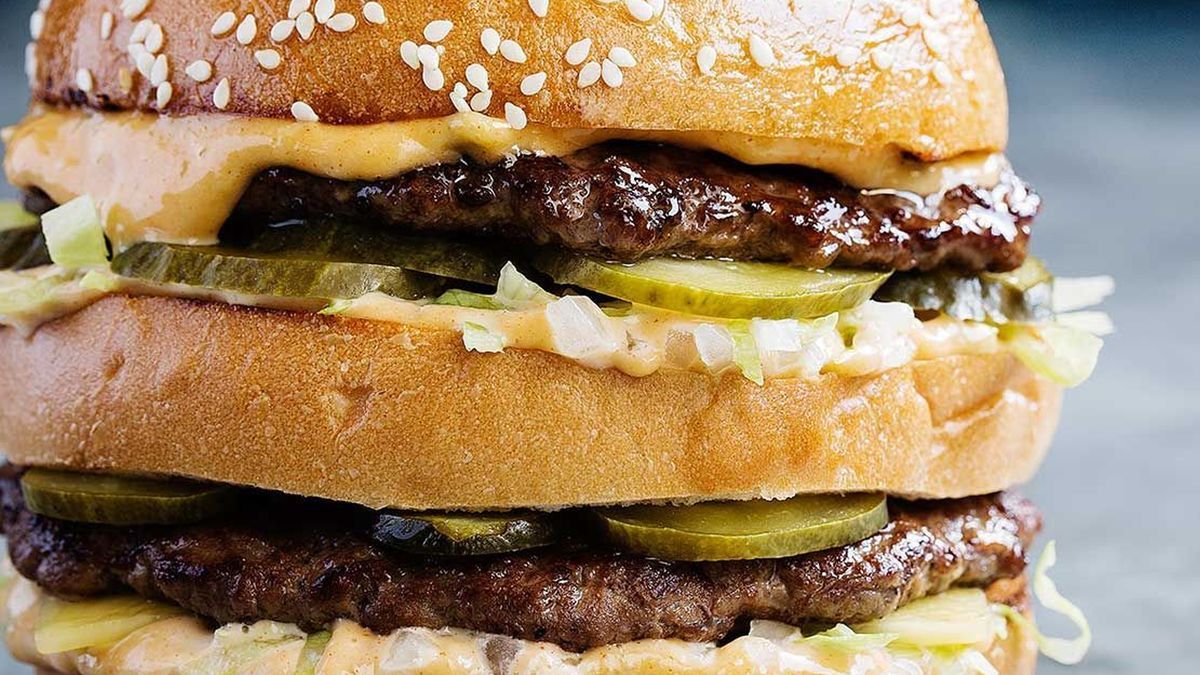
If you have ever tried to recreate Big Mac sauce at home, you probably followed a recipe that included ketchup. That method is fundamentally wrong. I have spent years researching this iconic condiment…
If you have ever tried to recreate Big Mac sauce at home, you probably followed a recipe that included ketchup. That method is fundamentally wrong. I have spent years researching this iconic condiment, and former McDonald's corporate chef Mike Haracz confirms the real sauce contains zero tomato products. Let me show you the authentic approach that actually works.
The Thousand Island Trap
For decades, the home‑cooking community has treated Big Mac sauce as a variation of Thousand Island dressing. That assumption makes logical sense on the surface, but it leads you down the wrong path. Thousand Island dressing always includes a tomato component. Authentic Big Mac sauce does not.
The pinkish‑orange color that tricks so many cooks comes entirely from paprika. When you add ketchup to your recipe, you introduce a specific type of tomato sweetness and vinegary acidity. That combination creates a fundamentally different product. Haracz has stated clearly that if you are putting ketchup in your sauce, you are making something entirely wrong.
Here is why this misconception persists:
- Visual confusion: The sauce looks like a mayo and ketchup blend, but that color comes from paprika alone.
- Flavor profile confusion: The sweet‑tangy notes lead people to assume a tomato element is required.
- Overlapping recipes: Fast‑food "secret sauces" like Russian dressing and Thousand Island use ketchup, reinforcing the error.
- Viral misinformation: Social media posts routinely list ketchup as a core ingredient, spreading incorrect formulations.
Pro‑Tip: Do not use French dressing as a shortcut, and never substitute dill relish for sweet relish. The sweetness is essential to the authentic flavor profile.
The Authentic Mike Haracz Method
I recommend following the Mike Haracz method for the most accurate results. This approach prioritizes the correct balance of fats, acids, and dry spices without introducing any tomato products. You will create a sauce that is structurally closer to tartar sauce than to any mayo‑ketchup blend.
Here are the exact ingredients you need:
| Ingredient | Amount | Notes |
|---|---|---|
| Mayonnaise | 1 cup | Hellmann's preferred; any brand works |
| Sweet pickle relish | ¼ cup | Provides sweetness and texture |
| Düsseldorf mustard | 2 tablespoons | Yellow or Dijon may substitute |
| White‑wine vinegar | 1 teaspoon | Clean acidity without tomato notes |
| Paprika | 1¼ teaspoons | Provides the signature color |
| Onion powder | 1 teaspoon | Adds savory depth |
| Granulated garlic | 1 teaspoon | Better dispersion than powder; prevents clumping |
| White pepper | ⅛ teaspoon | Keeps sauce smooth and speck‑free |
Follow these steps precisely:
- Combine 1 cup of mayonnaise in a medium bowl.
- Stir in ¼ cup of sweet pickle relish.
- Incorporate 2 tablespoons of Düsseldorf mustard.
- Add 1 teaspoon of white‑wine vinegar.
- Sprinkle in 1¼ teaspoons of paprika, 1 teaspoon of onion powder, 1 teaspoon of granulated garlic, and ⅛ teaspoon of white pepper.
- Whisk everything until the mixture is completely uniform.
- Let the sauce rest for at least 30 minutes at room temperature or in the refrigerator. This step is non‑negotiable.
The rest period allows the dry spices to hydrate and the flavors to meld. If you skip this step, your sauce will taste flat and the individual spices will stand out too sharply.
Verified Variations
You can modify the base recipe for specific dietary needs or flavor preferences. These alternatives maintain the core no‑ketchup principle while adjusting the profile slightly:
- Miracle Whip Base: Replace mayonnaise with Miracle Whip for a tangier profile. This variation introduces a pre‑existing sweetness and sharp bite. It rates five out of five stars for accuracy.
- Pickle Juice Method: Increase the sweet pickle relish to 4 tablespoons and the mustard to 4 tablespoons. Substitute pickle juice for the white‑wine vinegar to amplify the briny notes.
- Reduced‑Fat Version: Use light mayonnaise instead of full‑fat mayonnaise. You will notice a thinner texture and less rich mouthfeel, but the flavor profile remains intact.
Cost Comparison
I analyzed the economics of making this sauce yourself versus buying the bottled version. Here is what I found:
| Item | Approximate Cost | Yield | Cost per Fluid Ounce |
|---|---|---|---|
| Homemade No‑Ketchup Sauce | $2.30 | ~12 fluid ounces | $0.19 |
| McDonald's Bottled Sauce | $2.80 | 12 fluid ounces | $0.23 |
Making the sauce at home saves you roughly fifteen percent per ounce. More importantly, you gain total control over the ingredients. You eliminate artificial preservatives and ensure zero hidden tomato products.
Nutrition Facts
Nutritionally, the homemade no‑ketchup version aligns almost perfectly with the official McDonald's label. A standard 2 tablespoon serving contains:
| Nutrient | Homemade No‑Ketchup | McDonald's Official Label |
|---|---|---|
| Calories | 140 kcal | 140 kcal |
| Total Fat | 15 grams | 15 grams |
| Saturated Fat | 2.5 grams | 2.5 grams |
| Sodium | 190 milligrams | 190 milligrams |
| Carbohydrates | 3 grams | 3 grams |
| Sugars | 1 gram | 1 gram |
| Protein | 0.2 grams | 0.2 grams |
Because you omit ketchup, the sugar content stays low. All sweetness comes directly from the sweet pickle relish. The fat content remains identical because mayonnaise is the primary base in both versions.
Allergen Information
You need to verify allergen presence before serving this sauce to guests with dietary restrictions. The formulation contains:
- Eggs: Present in standard commercial mayonnaise.
- Soy: Found in most U.S. mayonnaise brands due to soybean oil.
- Mustard: The Düsseldorf mustard is naturally gluten‑free, but you should check your specific brand.
The sauce is naturally dairy‑free and gluten‑free. If you have a severe gluten allergy, verify that your relish and mustard carry certified gluten‑free labels.
Frequently Asked Questions
I compiled the most common questions from home cooks attempting this recipe:
- Is Big Mac sauce the same as Thousand Island? No. Thousand Island contains ketchup or tomato paste. Authentic Big Mac sauce contains zero tomato products.
- Why does the sauce look pink? The pink‑orange hue comes solely from paprika.
- Can I use regular yellow mustard instead of Düsseldorf? Yes, but Düsseldorf or Dijon provides a sharper bite that matches the restaurant profile more closely.
- Do I need to refrigerate the sauce? Yes. Store it in an airtight container in the fridge for up to one week.
- What about the 2018 McDonald's reformulation? The company removed potassium sorbate, sodium benzoate, and calcium disodium EDTA. By making this sauce at home, you automatically avoid those artificial preservatives.
Storage and Shelf Life
You must store your finished sauce properly to maintain quality. Place it in an airtight container and refrigerate immediately. The sauce will remain fresh for up to one week.
Before each use, stir the mixture thoroughly. The emulsion may separate slightly during storage, which is completely normal. A quick whisk will restore the smooth, cohesive texture.
If you stick to the paprika‑based coloring, use sweet relish, and allow the proper rest period, you will have a replica that is far more accurate than the thousands of ketchup‑based recipes circulating online. This is the method that actually works.