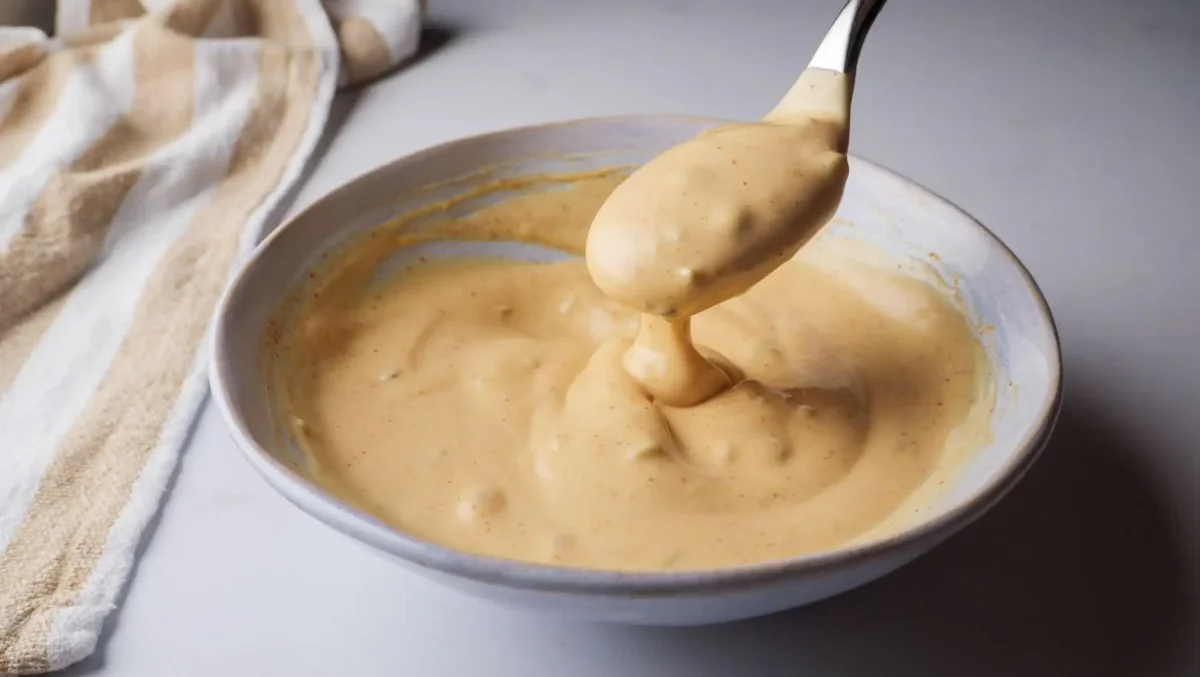
A standard portion of Big Mac Sauce adds exactly 140 calories to your sandwich. If you measure it separately, expect roughly 35 to 50 calories per tablespoon. I analyze fast-food nutrition daily, and …
A standard portion of Big Mac Sauce adds exactly 140 calories to your sandwich. If you measure it separately, expect roughly 35 to 50 calories per tablespoon. I analyze fast-food nutrition daily, and tracking this proprietary blend requires careful attention to serving sizes.
Official Calorie Metrics vs. Independent Trackers
McDonald's officially states that the Big Mac Sauce applied to a single burger contributes 140 calories. This figure serves as your most reliable baseline when logging meals from the restaurant.
The math shifts when you treat the condiment as a standalone item. Third-party databases standardize a single serving at 2 tablespoons, which weighs approximately 28 to 30 grams.
At this volume, the nutritional data consistently lists 70 calories. This breakdown contains 7 grams of fat, 1 gram of carbohydrates, and 0 grams of protein.
Tracker discrepancies arise because apps utilize different measurement standards. CalorieKing records the exact same serving at 90 calories. Other independent reports cite 105 calories for a 0.7 ounce portion.
- Official Sandwich Portion: 140 calories
- Standard Database Serving: 70 calories per 2 tablespoons
- CalorieKing Estimate: 90 calories per serving
- Alternative Weight Metric: 105 calories per 0.7 ounce
| Source | Serving Size | Calorie Count |
|---|---|---|
| McDonald's | Sandwich Application | 140 calories |
| Third-Party Average | 2 tablespoons | 70 calories |
| CalorieKing | Standard Serving | 90 calories |
| Weight Tracker | 0.7 ounce | 105 calories |
Breaking Down the Tablespoon Count
To calculate exact intake, you must isolate the tablespoon metric. Based on the 70-calorie benchmark, you are looking at approximately 35 calories for a single tablespoon.
Official-style databases sometimes list it as low as 23 calories per 15 milliliters. Aggregated nutrition data typically places the average closer to 45 to 50 calories per 1 tablespoon serving.
When I compare these commercial figures to homemade versions, the variance expands significantly. Depending on your choice of base ingredients, a DIY recipe ranges from 22 to 68 calories per tablespoon.
This wide spectrum tells a clear scientific story. The fat content drives the caloric density. Using full-fat mayonnaise versus a light substitute directly dictates your final number.
- Start with the official 2-tablespoon baseline of 70 calories.
- Divide by two to find the standard 35-calorie single tablespoon.
- Adjust upward if your tracker uses weight metrics like 15 grams.
- Expect higher counts if your recipe relies heavily on oil bases.
Decoding the Ingredient Profile
Since McDonald's treats the formula as a proprietary secret, they never publish a per-ingredient calorie breakdown. We have to synthesize international market disclosures to understand the nutritional architecture.
The United Kingdom provides a transparent ingredient list. It features water, rapeseed oil, gherkin, spirit vinegar, sugar, modified maize starch, free-range egg yolk, and spices like mustard. Additional stabilizers include xanthan gum, glucose-fructose syrup, calcium chloride, and natural flavorings.
In the United States, the formulation centers heavily on soybean oil, pickle relish, vinegar, sugar, and spices. This aligns closely with standard copycat approximations that rely on pantry staples.
From a technical food science perspective, the calories concentrate entirely in the soybean oil or rapeseed oil and the egg yolks. These components create a stable oil-and-water emulsion.
- Primary Fat Source: Soybean oil or rapeseed oil
- Base Emulsifier: Egg yolk
- Carbohydrate Drivers: Sugar and glucose-fructose syrup
- Flavor Base: Spirit vinegar, mustard, and pickle relish
| Ingredient Component | Nutritional Role |
|---|---|
| Rapeseed oil / Soybean oil | Provides the majority of fat and calories. |
| Free-range egg yolk | Acts as the primary emulsifying agent. |
| Glucose-fructose syrup | Delivers the carbohydrate base and sweetness. |
| Xanthan gum | Stabilizes the mixture and prevents separation. |
Managing Allergen Risks
If you manage strict dietary restrictions, understanding the exact composition is non-negotiable. The sauce contains specific allergens that trigger severe reactions in sensitive individuals.
The primary clinical concerns include egg and mustard. In the United States formulation, the heavy reliance on soybean oil introduces soy as a verified allergen.
While the core recipe is generally dairy-free, regional production lines vary widely. Some international lists note potential milk traces due to facility cross-contamination protocols.
Because the exact proprietary blend lacks full public transparency, you must exercise extreme caution. Do not assume regional recipes perfectly match international disclosures.
- Egg: Present in most formulations via egg yolk.
- Mustard: A standard spice component across all global markets.
- Soy: Introduced primarily through soybean oil in the US market.
- Milk: Possible trace exposure depending on manufacturing facilities.
| Allergen | Presence Level | Primary Source |
|---|---|---|
| Egg | Definite | Egg yolk |
| Mustard | Definite | Mixed spices |
| Soy | Definite (US) | Soybean oil |
| Milk | Trace Risk | Cross-contamination |
Storage Protocols and Shelf Life
The longevity of this condiment depends entirely on the emulsifiers and the high acidity of the vinegar. Professional environments and home kitchens operate under vastly different timelines.
In a restaurant setting, bulk supply bags require strict tempering and constant refrigeration. Once opened, the usable window shrinks to mere days. Freezing extends the timeline but permanently damages the creamy texture.
For consumer-purchased bottled alternatives, an unopened container survives 6 to 12 months in a cool, dry pantry. Once you break the seal, the preservation clock resets immediately.
You must refrigerate the opened product right away. Under proper cold storage, it remains stable for 4 to 6 months. Homemade versions lack industrial preservatives.
- Unopened Commercial Bottle: 6 to 12 months (pantry)
- Opened Commercial Bottle: 4 to 6 months (refrigerator)
- Restaurant Bulk Bags: Weeks (refrigerated), days (after opening)
- Homemade Copycat Batch: 1 to 2 weeks (refrigerator)
Always inspect the emulsion before use. Discard the sauce immediately if you notice discoloration, an off odor, or severe oil separation. Bulging packaging indicates dangerous bacterial growth.
Optimizing Home Portion Control
If you want to replicate the exact taste without the heavy caloric load, you need to understand the commercial application process. McDonald's uses a highly specific dispensing technique.
The corporate standard applies roughly 1.5 to 2 tablespoons of sauce per sandwich. This volume accounts for the full 140-calorie contribution listed on their official nutrition page.
When I recreate this flavor profile at home, I recommend drastically reducing the application volume. Limit your serving to exactly 1 teaspoon per burger.
This micro-dosing strategy preserves the signature flavor profile. You avoid the massive 140-calorie hit while still enjoying the tangy, creamy finish.
- Measure your sauce using a standard teaspoon.
- Apply 1 teaspoon evenly across the top bun.
- Layer lettuce and onion before the sauce to prevent structural sogginess.
- Skip additional ketchup or mustard to keep the overall fat content low.
Pro-Tip: If you must use more than 1 teaspoon, swap full-fat mayonnaise for a light alternative. This single substitution can drop your per-tablespoon count from 70 calories down to roughly 40 calories.
The disparity in reported numbers across the internet stems from inconsistent serving size definitions. Whether a tracker measures by the ounce, the gram, or the tablespoon, the underlying ingredients remain the same. By focusing on the fat-heavy components like soybean oil and egg yolk, you can accurately estimate the caloric impact regardless of which version you consume.